More homeowners are asking a straightforward question before replacing their siding: is there a way to protect my home without harming the planet? The answer is yes. Eco-friendly siding options now balance durability, curb appeal, and genuine environmental responsibility. Your home’s exterior covers the majority of its outer surface, making it one of the highest-impact areas for reducing your environmental footprint.
Big Easy Sidingis a trusted siding contractor serving New Orleans homeowners with quality installation across a range of sustainable materials. Contact us today to schedule your free estimate.
What Makes a Siding Material Truly Eco-Friendly?
A siding material earns the eco-friendly label by drawing from renewable or recycled raw materials, lasting a long time with minimal upkeep, and being recyclable once its service life ends. Siding that limits heat transfer through your walls also reduces the energy your HVAC system burns year-round.
Key Sustainability Factors
When evaluating any product, look at sourcing, manufacturing emissions, lifespan, and what happens when it comes down. A material that lasts 50 years sends far less waste to landfills than one replaced every 15 years.
Certifications Worth Looking For
Independent third-party certifications help verify manufacturer claims. The most recognized standards include:
Forest Stewardship Council (FSC): Confirms wood products come from responsibly managed forests. As of April 2024, FSC-certified forests cover over 160 million hectares worldwide.
GREENGUARD Gold: Certifies a product meets strict chemical emission limits. Applied to specific product lines where low indoor emissions are a documented priority.
LEED Eligibility: Products that contribute points toward Leadership in Energy and Environmental Design certification for the broader construction project.
SCS Global Verified Recycled Content: Third-party confirmation of the percentage of recycled materials in a product’s composition.
Is Fiber Cement Siding a Sustainable Choice for New Orleans Homes?
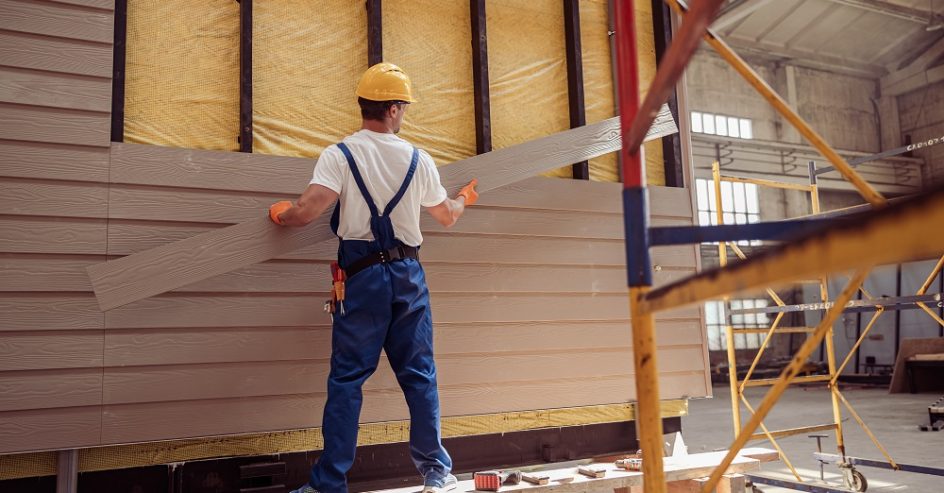
Yes. Fiber cement is widely considered one of the most eco-friendly siding materials available. Made from wood pulp, cement, and sand, some products contain up to 70% recycled materials as verified by SCS Global. It can last 50 years or more with proper care, meaning fewer replacements and less landfill impact.
Sustainability Credentials
James Hardie exterior siding products contribute points toward LEED project certification through the U.S. Green Building Council for recycled content and regional materials. The company has set a goal of a 42% absolute reduction in Scope 1+2 greenhouse gas emissions by 2030, which combined with their Low Carbon Cement Technology Roadmap they expect to result in over a 50% reduction in the CO2 impact of their products. Key green features include:
No VOC off-gassing over its service life: Fiber cement does not emit volatile organic compounds once installed, unlike vinyl which can off-gas throughout its lifespan.
Non-leaching composition: It does not release toxic chemicals into soil or groundwater, verified by independent environmental assessments.
Waste takeback: James Hardie’s Zero to Landfill initiative works to recycle manufacturing trim cuttings and reduce landfill-bound waste from production.
Performance in High-Humidity Climates
Fiber cement resists rot, pests, moisture, and fire, reducing the need for chemical treatments over time. For New Orleans homes facing high humidity and heavy rainfall, it performs without the warping or cracking that affects less durable materials.
Long-Term Cost and Environmental Value
A fiber cement installation that lasts five decades avoids multiple rounds of tear-off, disposal, and reinstallation. Each avoided replacement cycle keeps material out of landfills and reduces the energy and emissions tied to manufacturing new siding.
Why Is Metal Siding Considered a Green Building Material?
Metal siding stands out for recyclability. Steel is the most recycled material on the planet, and roughly 70% of steel produced in the United States comes from recycled scrap according to the American Iron and Steel Institute. When metal siding comes down, it can be melted and repurposed rather than sent to a landfill.
Durability in Gulf South Conditions
Metal requires very little ongoing maintenance and no chemical treatments, keeping its environmental footprint low over its service life. It holds up well against the specific conditions New Orleans homes face:
High humidity: Metal does not absorb moisture, preventing rot and warping.
Mold and mildew resistance: A non-porous surface gives mold no foothold.
Pest resistance: Metal offers no food source for termites or carpenter ants common in the Gulf South.
Storm resilience: Steel and aluminum panels resist high winds, a practical advantage during hurricane season.
Style Options
Corrugated panels, vertical profiles, and horizontal metal siding each offer distinct results. A wide range of factory finishes makes metal practical for modern, industrial, or traditional homes.
Can Wood Siding Be an Eco-Friendly Option?
Wood siding can be eco-friendly when sourced from responsibly managed forests or reclaimed from existing structures. Reclaimed wood keeps usable material out of landfills and reduces demand for new logging. FSC certification, which now covers more than 160 million hectares of forest worldwide, gives homeowners a verified way to confirm responsible sourcing.
Best Wood Species for New Orleans Homes
Wood species vary in durability and suitability for humid subtropical climates. The following perform well in Gulf South conditions:
Cypress: Dense, fine-grained, and naturally rot and insect resistant. A long-standing staple in Louisiana construction, well suited to wet climates.
Cedar: Naturally resistant to rot and moisture. Works well stained, painted, or left to weather naturally.
Redwood: Rich grain and natural rot resistance. Best paired with FSC certification to verify sustainable sourcing.
Engineered Wood: Combines wood fibers with resins to reduce milling waste while delivering the look of natural wood.
Low-Carbon Manufacturing Advantage
Wood siding has a lower-carbon manufacturing process than vinyl or synthetic materials. It does not rely on fossil fuels for production, and milling byproducts like sawdust and bark can be recycled into engineered wood products.
How Does Insulated Siding Reduce Your Home’s Carbon Footprint?
Insulated siding improves your home’s thermal barrier, which directly lowers energy consumption. In a climate like New Orleans, where cooling runs most of the year, better wall insulation produces a real difference in monthly utility costs and household carbon output.
Energy and Comfort Benefits
Insulated siding features a rigid foam backing that reduces thermal bridging through exterior walls. Benefits homeowners typically see include:
Lower monthly utility bills: Reduced heat gain through walls cuts cooling demand during long New Orleans summers.
Extended HVAC equipment life: Fewer run cycles mean less wear and a longer service life before replacement.
More consistent indoor comfort: Fewer temperature fluctuations throughout the day, especially in rooms with exterior wall exposure.
Improved moisture management: Rigid foam backing reduces condensation risk within wall cavities, protecting structural framing over time.
Which Eco-Friendly Siding Works Best for the Gulf South Climate?
The best sustainable siding for a New Orleans home must handle moisture, heat, and storm exposure without heavy chemical maintenance. Fiber cement, metal, and responsibly sourced wood all perform well in the Gulf South. Pairing any of them with an insulated backing layer adds energy efficiency on top of durability.
How Top Eco-Friendly Materials Compare
Each option brings different strengths to a Gulf South installation:
Fiber cement: Resists warping, moisture, rot, and pests. Lasts 50-plus years and contributes to LEED certification for recycled content and regional materials.
Metal siding: Blocks mold and pests. Fully recyclable at end of life, with U.S. steel production drawing roughly 70% from recycled scrap.
Reclaimed and FSC-certified wood: Proven Gulf South performance in species like cypress and cedar. Low-carbon manufacturing with a natural aesthetic.
Insulated siding systems: Adds thermal performance to any base material and reduces HVAC wear in a high-heat climate.
Choosing the Right Fit for Your Home
The right combination depends on your home’s architecture, budget, and energy goals. A local contractor familiar with New Orleans conditions can match the right material to your specific project and wall assembly.
Choose Siding That Works for Your Home and the Planet
Selecting the right siding material shapes your energy costs, maintenance schedule, and how much waste your home generates over its lifetime. Fiber cement, metal, responsibly sourced wood, and insulated siding each offer a practical path toward greener living without sacrificing durability or curb appeal.
Big Easy Siding brings years of experience to New Orleans siding projects, and our team is ready to help you find the right sustainable option for your home.
Call us today to get your free estimate and take the first step toward a more energy-efficient exterior.
Frequently Asked Questions
What is the most eco-friendly siding material?
Fiber cement is broadly regarded as the top eco-friendly siding option. Products like TruExterior contain a minimum of 70% recycled content verified by SCS Global, and James Hardie exterior siding contributes to LEED certification points for recycled content and regional materials. Fiber cement can last 50 or more years without leaching toxins into the environment.
Is metal siding more sustainable than vinyl?
Yes. Metal siding, particularly steel and aluminum, is made from high percentages of recycled content and can be recycled again at end of life. Traditional vinyl siding is made from PVC, which releases volatile organic compounds during manufacturing. Post-consumer PVC recycling rates in the United States remain very low, with most curbside programs not accepting it, making vinyl one of the least recyclable exterior building materials.
Does sustainable siding cost more upfront?
Some eco-friendly options, like fiber cement and reclaimed wood, carry a higher initial price than basic vinyl. However, their longer service lives, lower maintenance requirements, and energy savings often result in lower total costs over a 20 to 30 year period.
Can reclaimed wood siding hold up in New Orleans?
Yes. Reclaimed cypress has a long track record in Gulf South construction. It is naturally dense, rot-resistant, and handles high-humidity environments well when properly sealed and periodically maintained.
Does insulated siding actually lower energy bills?
Yes. Insulated siding reduces heat transfer through exterior walls, keeping indoor temperatures more stable with less mechanical cooling. Homeowners in hot, humid climates often see measurable savings on cooling costs after installation.
What certifications should I look for in eco-friendly siding?
Look for FSC certification on wood-based products, which now covers over 160 million hectares of forests worldwide. For low-emission products, seek GREENGUARD Gold certification. For construction projects, LEED-eligible products from certified manufacturers provide additional third-party confirmation of sustainability standards.


 By Admin
  Mar 20, 2026
  GREENGUARD Gold: Certifies a product meets strict chemical emission limits. Applied to specific product lines where low indoor emissions are a documented priority.
 High humidity: Metal does not absorb moisture, preventing rot and warping.
 Metal siding: Blocks mold and pests. Fully recyclable at end of life, with U.S. steel production drawing roughly 70% from recycled scrap.